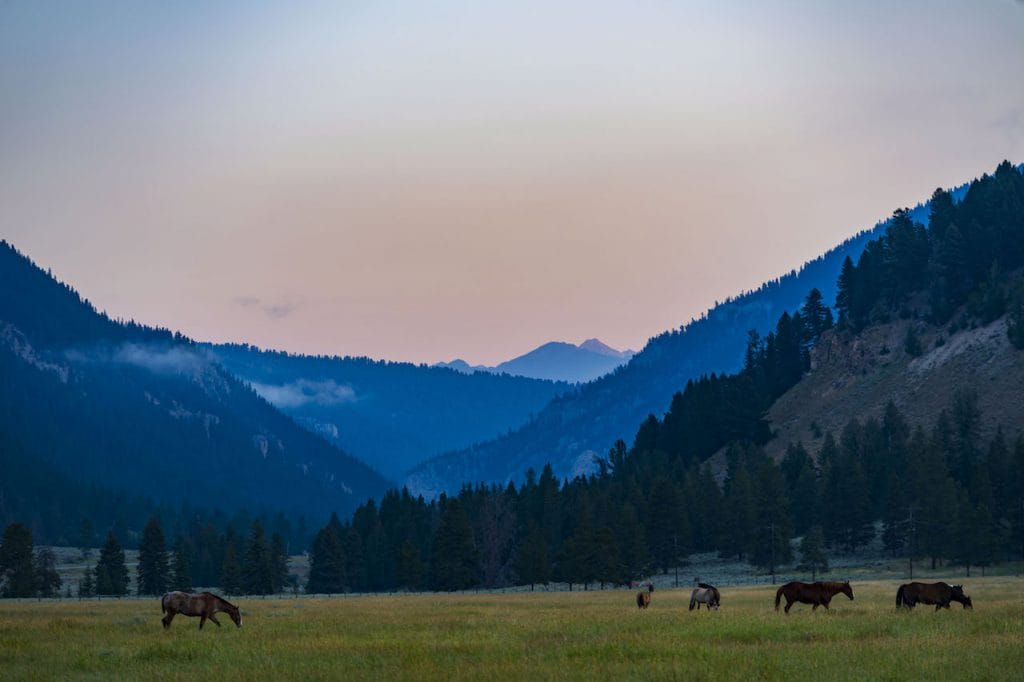
This week we are sharing sunrises from some of our favorite Adventures by Disney destinations. Each sunrise proves as special and unique as its location, from Venice‘s scenic canals to Greece’s ancient temples and Prague’s historic old town.
The Venice Canals, Italy
Temple of Poseidon in Cape Sounion, Greece
Monument Valley in Utah, United States
Charles Bridge in Prague, Czech Republic
Big Sky in Montana, United States
The Canals of Amsterdam, the Netherlands
Stay tuned for more #DisneyMagicMoments like this. And from our sunrise to yours, good morning and have a magical Monday!
From our friends at disneyparks.disney.go.com Filed Under: Adventures by Disney, ABD, DisneyMagicMoments
One perennial question for Walt Disney World visitors is the question: Should I drive or fly to my vacation?
In typical times, the answer to this primarily hinged on two factors, cost and time requirements. Now that we’re in the time of Coronavirus, there are a host of other elements to consider as you make this decision.
During the pandemic, driving could be the right transportation mode for visiting Disney World.
Disclaimer: Walt Disney World is taking numerous steps to ensure the health and safety of guests and employees. That said, the current economic and COVID situations mean that now may not be a prudent time to visit the parks, depending on your personal situation. This post assumes that you have assessed your own risk factors and already decided to vacation at Disney World.
I live in the New York City area. I’ve been to Walt Disney World in the ballpark of 100 times. Of those times, I’ve driven exactly twice. The drive itself takes approximately 16-18 hours, plus stops for gas/bathrooms/fuel/etc., making the journey a two-day affair, at a minimum. Contrast this with a two and a half hour flight and, for me, the choice had always been clear.
But now that Coronavirus is a factor in any travel situation, and my personal situation has changed a bit, the calculus is not as easy. For the first time in well over a decade, I’m seriously considering driving from the Northeast to Florida rather than flying. These are some of the things I’m thinking about, as well as some things that could play a role in your decision process.
On the other hand, flying could be the right option, depending on your circumstances.
The price of flights may be different than you’re used to.
In the past few years, I’ve typically encountered round-trip flight prices from the major NYC airports to Orlando International in the range of about $250 (for off-hours flights in the low season) to about $700 (for peak hour flight during holiday weekends). Airline pricing is now incredibly volatile, I recently saw a rate from Newark to Orlando, round trip, for about $100. That’s tough to pass up. You’d be hard pressed to find a mid-drive hotel for less than that, not to mention several tanks of gas and wear and tear on your vehicle.
Airline safety protocols vary.
Not all airlines are using the same standards of cleaning and mask enforcement. Delta’s mask policy is quite strict and is being strenuously enforced. On the down side of the safety spectrum, Southwest Airlines is no longer sanitizing seatbelt latches between all flights. Other airlines may have different issues. Additionally, you could book a flight and then a few days later their entire COVID procedure profile could change. Your personal health and your tolerance for risk will impact how you feel about these factors.
The science of COVID safety on airlines is still developing.
Early in the pandemic, airplanes were assumed to be the very definition of an unsafe environment. More recently, I’ve seen articles that air travel is not the disease vector it was once assumed to be. And of course much of your personal risk on an airplane depends on your own behavior. Wear multiple masks, don’t take them off to eat, sanitize your seat area, wash your hands thoroughly, sit away from others, and you’re likely in the safe travel zone. Sit maskless in an uncleaned middle seat and you’re exposing yourself to more risk. Nevertheless, we still don’t have all the answers on how to best fly safely. And of course, any exploration of air safety will have to be compared to factors of safety related to auto travel.
What are the COVID-related risks associated with driving?
If you’re driving for a number of hours, you will likely have to stop for food, fuel, and bathroom breaks. In each of those situations, you’ll be exposing yourself to untold numbers of people at rest stops and gas stations, any of whom could have questionable COVID safety habits.
You can mitigate some of these issues by bringing a cooler with your own food and by wearing a mask and sanitizing at fuel stops. I’ve even read more than one article about travelers avoiding public restrooms while road tripping by bringing an adult-size portable toilet, plastic bags, and a pop-up solo tent. This seems extreme to me, especially considering that once you get to Disney World you’ll almost certainly be using public facilities, but if you’re the wary sort, it is an option.
Depending on the distance you’re traveling, a drive may also involve an overnight hotel or campsite stay, each of which has myriad safety considerations of its own.
Unrelated to Coronavirus, there are general considerations about accident rates and other dangers of driving vs. flying that you may want to consider.
How many people are in your travel party? (Financial version)
When I visit Walt Disney World for research trips, I typically travel alone. That means I’m only paying for one flight. However, with a larger party, you’ll obviously need to pay for additional airfare. When driving, the cost of gas is only minimally impacted by adding an additional traveler, or two, or three. The larger your group, the more likely it is that, from a financial perspective, the transportation equation will fall on the side of driving.
How many people are in your party? (Workload version)
As I mentioned, I often travel to Walt Disney World on my own, mostly because my kids are in college and my husband’s work has limited vacation.
Driving alone could be tough for 4+ full days (2 there, 2 back), with no respite. However, with COVID modifying everyone’s schedules, my husband and at least one of my daughters are working fully remotely for the foreseeable future. This means they could work from almost anywhere, including a Disney World hotel room. They could drive with me! And more drivers equals an easier drive. (Though if more people are coming that increases the cost of food and park tickets, and it poses more opportunities for someone to pick up germs along the way.)
How much family bonding time do you need/want at this point?
If you had asked me in February if I’d want to go on a long road trip with my family, I’d have jumped at the chance to work in some unexpected bonding time. But, like many families, we’ve had a lot of togetherness lately (like, a lot, a lot) while stuck in quarantine. Depending on your dynamic, at this point in the pandemic, being captive with several people in a small space for days on end could be tantamount to torture. Flying for the win on that front.
How long is your trip?
If you only have a five-day vacation, then spending nearly that much time traveling in the car likely does not make sense. If you’re planning a three-week stay in Florida, then maybe car time doesn’t sound so bad.
A corollary of this is your distance from Florida. A two-day drive from New York is one thing. If you live in the Pacific Northwest, the 4-6 day drive on both sides of the trip would be a non-starter for most.
What is the COVID situation like along your route?
Disney is taking many COVID precautions (masks, temperature checks, etc.) making it a relatively safer spot than much of the Southeastern United States. If you live in a current safe zone (say, Vermont), you may feel that a few hours on a plane is less problematic than a days-long drive through COVID hotspots.
How will you get around Disney World once you’re there?
Pre-pandemic, when flying to Disney World, I rented a car about 25% of the time, usually when the trip was short or when I was going for a runDisney event with an early wake-up time. During most visits, I prefer to use Disney’s free transportation system. Despite Disney’s transportation social distancing precautions, I’m still not sure I want to be riding buses during the pandemic. During my next trip, I’ll want to have access to a private vehicle. This could be a rental car, but that’s an added expense and there are potential cleanliness issues. But if I drive, then I’ll obviously have my own car that’s occupied by only known people.
What other elements go into your fly/drive equation? How is your decision different now vs. your pre-pandemic?
How long will this stormy and sweaty pattern stick around in Central Florida? If you answered: “Through October!” haha, you’re very funny, and partially right. But if you’ve been around Walt Disney World, Universal Orlando, or anywhere else here in the center of the state, you’ve probably gotten slammed with some big storms in the late evening. Rain has been higher than average for the past week. What’s going on? It’s all to do with sea breezes.
We know that sea breezes meet in the middle of the state and the collision causes storms. Well, some complicated acrobatics take place with the sea breezes every afternoon. A prevailing flow usually dictates if the east coast or west sea breeze is strongest. On those stormy evenings when the rain seems to blossom over Orlando and refuse to move away, that’s because there’s no real guidance from the atmosphere: the east and west sea breeze simply meet in the middle and blow up there.
We started there last week, but then we picked up a southwest flow. Since the second half of last week, a high pressure ridge has been sitting south of Central Florida. The resulting southwest flow ramps up the moisture as well as pushing the storms from west to east. So we’ve had some big afternoon storms, with boundary collisions lingering late into the night. They’ve been making big lightning shows, roughly from the Walt Disney World area to points east. Hail and gusty winds have produced damage in the area, as well.
The storms have eventually crowded over to the east coast, and that trend will continue this week. The southwest flow can be strong enough some days to pin the sea breeze to the Atlantic beaches. When that happens, the storms congregate along the collisions which occur along the east coast, leaving the interior of Florida sweltering with just some brief storms to break up the day.
Midday cumulus lead to afternoon storms!
Whether you prefer a day with quick rain and a return to sunshine and broken clouds, or a wild and wet evening, you’ll usually get both in a single week in Central Florida. One weather pattern rarely sticks around longer than three or four days. The southwest flow is going to be with us through Thursday, but each day will have its own twists on the theme.
Troughing in the Gulf of Mexico, that steadfast Atlantic ridge to our south, and a stormy feature over the southeast will all keep the moisture high in the atmosphere through the coming week. The strength of the daily southwest flow is the only question in each day’s forecast. It’s not whether it will rain in Central Florida, it’s who will get rained on, and who will stay hot?
This week’s weather at Walt Disney World
For the rest of Sunday, the general idea of hot with a chance of storms is good. The southwest flow throws a little wrench into the storm forecast itself, though. Starting early this morning, some showers were already making their way onshore from the Gulf of Mexico. At the same time, there seems little chance of an east coast sea breeze today.
So while storms are probably going to favor the Atlantic coast this afternoon and evening, some scattered storms could flow into the Orlando from the west. Either way, it should dry out in the evening.
Monday through Thursday, the rain chances stay above average with about a 70-80% chance each day. Look for sunny, humid mornings that quickly climb to about 93 degrees before afternoon storms begin to develop in the early afternoon. Nights will be quite warm: around 76 for a low, with a calm wind.
Storms could become numerous in late afternoon, and will likely travel from west to east. As boundary collisions produce more storms, however, their movement can become erratic and surprising, so always be on guard when you notice lightning in the distance. We saw this one night last week when storms hung out nearly stationary near the parks for a few hours, then suddenly billowed onto property just after sunset, bringing heavy rain and very severe lightning.
By Friday, the pattern begins to shift. The Atlantic ridge should finally shift from its position to the south and move into Florida. Friday’s rain chance is still 70%, high for the time of year, but moving into the weekend things should become more seasonal. The southwest flow will subside and the weekend will have a 40-50% chance of an afternoon storm.
Tropical Weather Outlook
There’s suddenly a lot going on in the tropics, although the two named storms currently out there are mostly raining on the fish. Post-Tropical Cyclone Kyle is heading across the Atlantic, and Tropical Storm Josephine is near Puerto Rico but is expected to run into high pressure and get shunted out to sea.
Two waves are a distant, slight concern. Image courtesy NOAA/NHC
There are two tropical waves well to the south which are being watched for development this week. Both have a formation chance of about 30% in the next five days. Neither is really expected to achieve any development before mid to late week. One or both of these could be topics of conversation next Sunday, but even then they’ll still be very far away from Florida.
Have any weather questions for this week? Let us know in the comments.
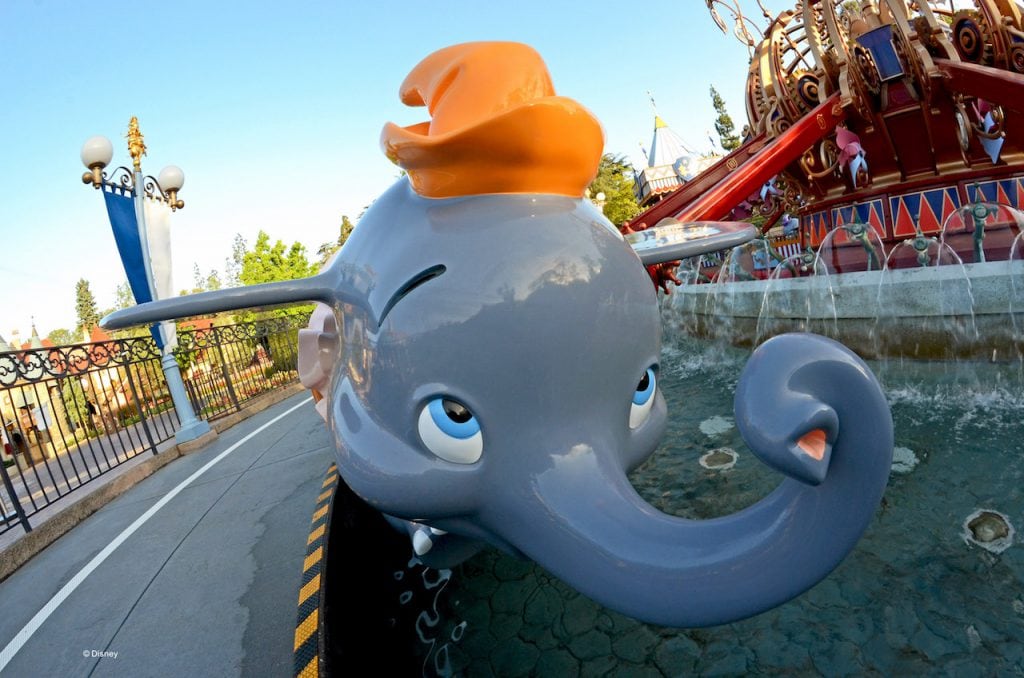
65 years ago, a Disneyland icon was unveiled as Dumbo the Flying Elephant took to the sky in Fantasyland. Featuring characters from Walt Disney’s 1941 classic animated film, “Dumbo,” this high-soaring adventure brings us into Dumbo’s circus world. Special details can be found within the attraction, including an antique band organ, located under the circus tent just behind the flyers. In the center of the “ring,” Dumbo’s faithful friend, Timothy Q. Mouse, directs the action with help from his “magic” feather.
Guests have clamored to take wing with their favorite elephant over the years; indeed, boarding for a first spin on Dumbo the Flying Elephant has become a rite of passage for Disneyland park’s youngest visitors.
As part of the Fantasyland remodel in 1983, Dumbo the Flying Elephant moved from the west side of Fantasyland to its current location, formerly the home of Skull Rock Cove. Another enhancement occurred in 1990, when six elephants were added to the attraction, for a current total of 16 vibrant pachyderms. In 2005, on the occasion of Disneyland’s 50th anniversary, an elephant from the ride was donated to the Smithsonian National Museum in Washington, D.C.
The popularity of these colorful flying elephants has proved so enduring, they now fly in six Disney parks around the world. Dumbo’s endearing ability to believe in himself and glide into the skies reminds guests everywhere if you believe in yourself, anything is possible!
From our friends at disneyparks.disney.go.com Filed Under: Disney History, Disneyland Park, Disneyland Resort, DL, DLR
Today is National Roller Coaster Day, so we’re celebrating here on the Disney Parks Blog with an amazing mashup video of Disney coasters from around the world. We’ve taken some of our favorite moments from our “Ride & Learn” series and combined them into a “greatest hits” collection in honor of this special day.
When you click on the video below, it’s like you’re magically transported from one Disney park to the next and dropped right into a seat on your favorite coaster. Be sure to keep your arms inside the vehicle at all times and remove your hats and glasses, because you’ll experience high-speed launches, climb to the top of a mountain, brave a forbidden temple and much more. And along this high-speed journey, you may learn a thing or two about Disney coasters, too! If you can keep your eyes open, that is.
So, happy National Roller Coaster Day, everyone! If you want even more Disney fun, follow the links below to the full “Ride & Learn” video from each coaster you saw here. And be sure to keep checking back with us at the Disney Parks Blog for more #DisneyMagicMoments like this one!