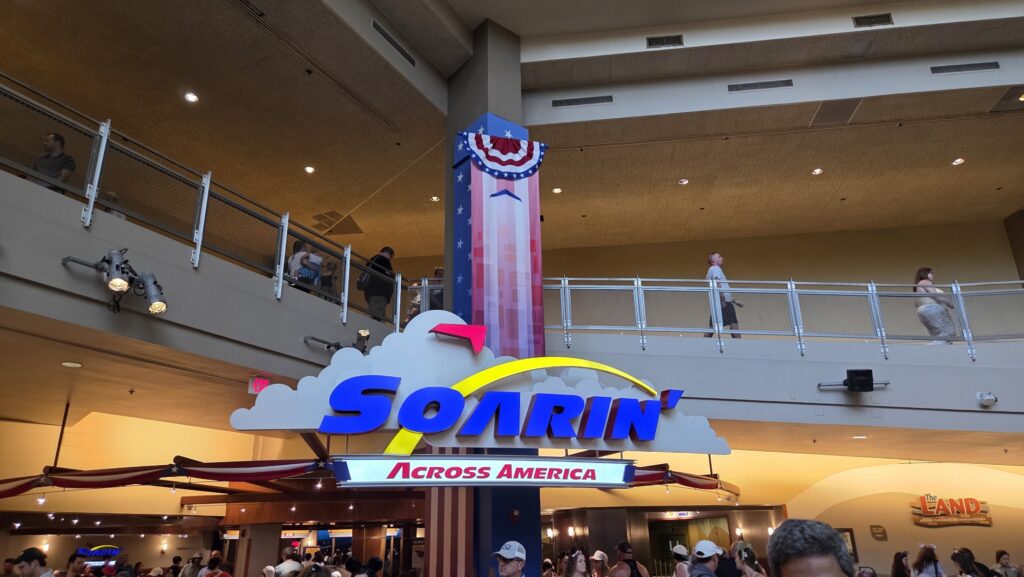
Disney Imagineers may be preparing to revolutionize flight simulators with a newly published patent revealed on October 29, 2026. The concept features a rotating floor and tilting platform designed to enhance the traditional flying theater experience. Unlike current attractions that use suspended seating, this innovation allows guests to board on a flat, stationary surface before the platform begins its rotation. Once positioned, the ride system uses coordinated movement with immersive projection technology to simulate travel through various environments. For instance, the patent describes a scenario where riders in a virtual canoe would feel the motion of water and the sensation of plunging over a waterfall through synchronized platform tilt. While the design shares similarities with Soarin attractions at Disney parks, it introduces a different boarding mechanism that could streamline the loading process. Many patented concepts from Disney never progress beyond design stage, with no current announcement linking this technology to specific park attractions. The filing indicates that Imagineers continue exploring innovative ways to improve guest immersion in their storytelling experiences. Whether this flying theater concept will ever materialize into an actual ride remains uncertain at this point.
Key Points:
- Disney published a patent on October 29, 2026 for a flying theater attraction with a rotating floor and tilting ride platform.
- The new concept allows guests to board on a flat platform before it rotates into show position, unlike current suspended seating systems.
- The patent describes coordination of movement and visual effects to simulate environments like canoe rides with waterfall plunges.
- No announcement has connected this technology to an upcoming attraction at Walt Disney World, Disneyland, or other Disney parks.
- Disney regularly files patents for new ride concepts, many of which never progress beyond the development stage.